Executive Presence
What Is Executive Presence? Image, Behavior and Communication
By Lynda Osorio, MBA · Personal & Corporate Image Consultant · Miami, FL
November 20, 2026 · 11 min read
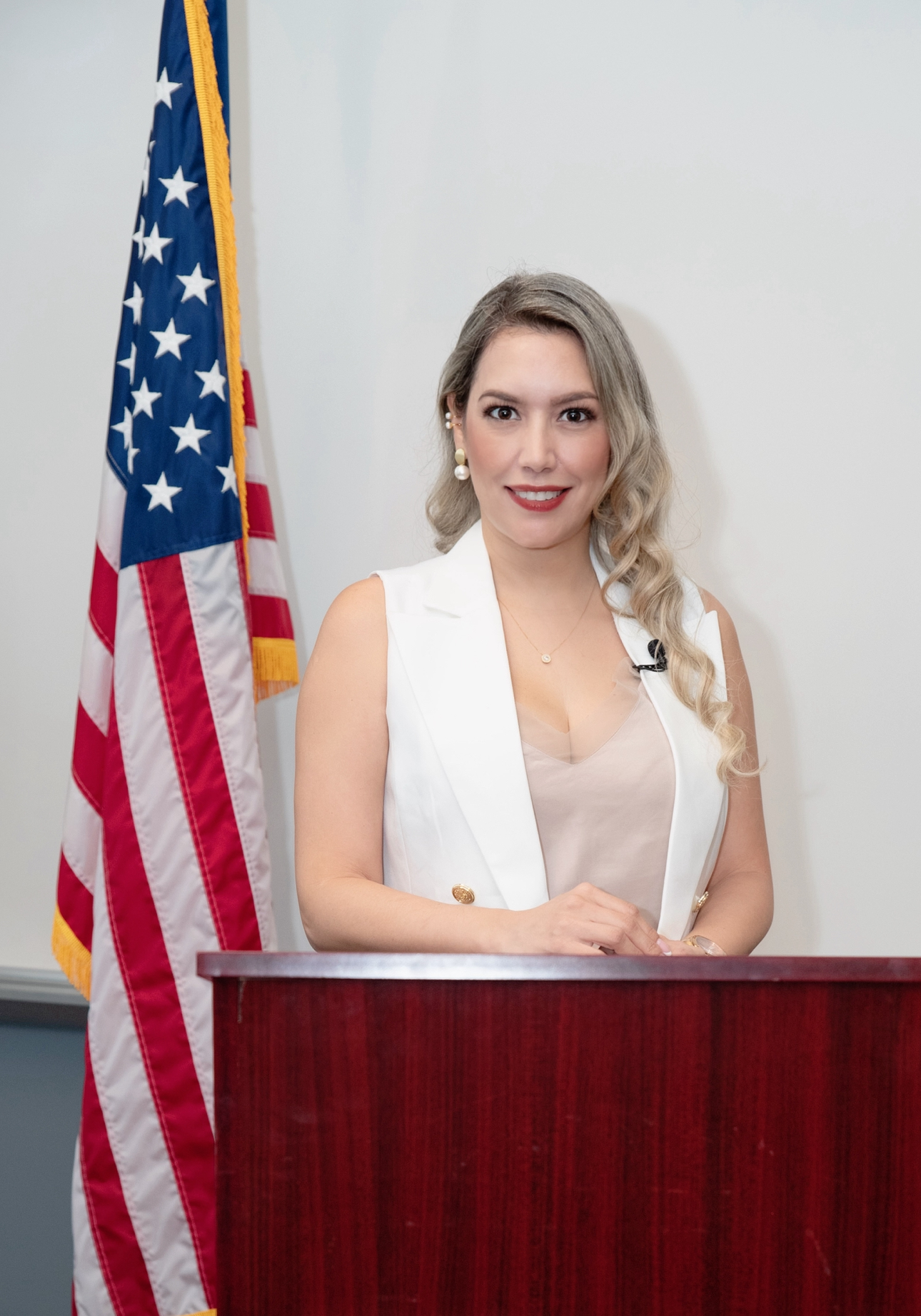
What is executive presence?
Executive presence is the coherence between how you look, how you act and how you communicate in a professional setting. It is how your preparation, judgment and reliability become visible to other people. It is not a job title, a particular suit or the ability to dominate a conversation. A leader can be highly capable and still send signals that make that capability difficult to recognize. Working on presence means bringing those signals into alignment with the person and the professional responsibility behind them.
This matters in a negotiation, a board presentation, a client meeting and a video call. In each setting, people receive your message through more than your words. They also see your posture, notice your attention and hear your delivery. Executive presence does not replace experience or competence. It helps you communicate them with greater clarity. The goal is not to become someone else, but to reduce the distance between your professional value and the way you present it.
The three dimensions of presence
How you look concerns your appearance and the visual context around you: clothing, grooming, accessories, your workspace and your camera frame. How you act includes your posture, gestures, listening, attention and professional etiquette. How you communicate includes your voice, message structure, writing and digital identity. These are useful dimensions for examining the same experience, not independent performances to perfect in isolation.
Consider a well-prepared presentation delivered while looking down at a phone. The appearance may be appropriate and the information may be sound, but the behavior interrupts the message. Equally, a confident voice cannot make an unclear recommendation easy to understand. Review the dimensions together. Ask whether they support the same professional intention. Coherence is more useful than trying to make every individual detail impressive, because people experience the whole interaction rather than a checklist of separate attributes.
First impressions: preparation before the greeting
Your image starts communicating before your formal introduction. The way you arrive, greet people, take your place and prepare your materials is part of the professional encounter. Rather than treating the first impression as a performance, treat it as preparation. Know who will be in the room, what the conversation is for and the level of formality it requires. Choose an appearance and a manner of greeting that fit that context.
You do not need an invented personality or an exaggerated display of confidence. You need attention to the encounter. Put distractions away, acknowledge the people present and begin with a clear purpose. In a virtual meeting, the equivalent preparation includes checking your camera, light and background. The aim is to make the first contact consistent with everything that follows. A polished opening loses meaning if your listening and communication later contradict it.
Executive wardrobe: intention before trends
An executive wardrobe is a communication tool, not a uniform. Start with the role you represent and the setting you are entering. A client negotiation, a networking event and an internal workshop may call for different levels of formality. The question is not simply whether you like an outfit. It is whether the outfit supports the professional message and allows you to participate comfortably in that particular setting.
Fit, condition and coherence matter across the whole look. Review the relationship between clothing, shoes, accessories and grooming rather than focusing on a single statement piece. Work with the garments you already have before assuming that more shopping is the answer. Tailoring and thoughtful combinations can make the wardrobe more purposeful. Preserve personal identity: a recognizable color, silhouette or accessory can be part of a professional image when it is chosen with intention rather than used to distract from the conversation.
Body language: make attention visible
Posture, gestures, eye contact and the way you occupy space are part of nonverbal communication. They can support your words or create a competing message. Begin by observing your habits rather than adopting theatrical gestures. Notice whether you collapse into the chair, turn away from the person speaking or keep handling your phone. Ask whether your physical behavior makes participation and attention visible.
A grounded posture and gestures connected to the message help keep the interaction coherent. Eye contact should recognize the people present, not become a contest. Listening also has a physical expression: facing the speaker, allowing them to finish and responding to what they actually said. In a professional setting, presence includes making room for other people. Authority does not require taking all the space or speaking whenever there is a pause. It can be expressed through calm, attentive participation.
Voice: clarity without rushing
Vocal presence includes tone, pace, volume and silence. These elements shape how a message is received, alongside its content. Prepare the central idea before worrying about sounding powerful. If the idea is unclear, a louder voice will not solve the problem. Aim for delivery that lets the listener follow the argument and understand what matters. Pauses can give both you and the audience space to process the message.
Practice aloud rather than preparing only on paper. Listen for rushed passages, unfinished sentences and a tone that disappears at the end of the recommendation. In a virtual setting, check that your microphone carries the voice clearly. You do not need to imitate a presenter or erase your own way of speaking. The purpose is to make your communication usable: audible, understandable and consistent with the confidence you have in your professional judgment.
Executive communication: make the decision clear
The existing board-presentation article emphasizes clarity over completeness. Executive communication is not a contest to include all the information you possess. It is the work of making a professional position understandable, supporting it with relevant evidence and clarifying the next step. Know what you are asking the audience to decide, understand or do before building the presentation around it.
Separate the recommendation from the background that supports it. Anticipate questions and acknowledge the limits of what you know. If you do not have an answer, say so and identify the follow-up rather than improvising certainty. This approach keeps the message connected to responsible professional behavior. A clear conclusion, a considered explanation and an explicit next step help the audience engage with your judgment instead of searching through the presentation to discover what you meant.
Digital presence and LinkedIn
Your professional image also exists when you are not in the room. A LinkedIn profile, an email signature and written communication can introduce you before a meeting. Review whether those touchpoints communicate the same identity as your in-person presence. A current photograph, a clear headline and an About section connected to your work are foundations for a profile that is understandable rather than merely decorated.
The site's personal-branding guidance asks what the profile is for, who needs to find you and what perspective you can contribute. Use those questions to choose what you share. Communicate real experience and a relevant point of view without inventing achievements or turning every post into self-promotion. Consistency between your online message and your actual professional behavior matters. Digital presence should support recognition and conversation, not construct a persona that your clients or colleagues would not recognize.
On-camera presence is professional presence
A video call brings appearance, behavior and communication together in a compact setting. The camera frame, lighting, background and voice become part of the encounter. Put the camera at eye level, check that your face is visible and choose a background that does not compete with the conversation. Prepare the environment as intentionally as you would prepare the materials for an in-person meeting.
Then consider how you participate. Looking toward the camera while speaking, listening without handling unrelated tasks and keeping the message structured all support coherence. A professional virtual presence is not simply a good photograph held on screen. It is a live interaction with other people. Before an important call, check the sound and framing together, and make sure the digital setting supports the professional message you intend to deliver.
How Capital Visual™ structures the work
Capital Visual™ is Lynda Osorio's methodology for mapping the touchpoints that determine how personal and corporate brands are perceived. Her image formula is Image = ((A+B+C)×D)^E.
The methodology provides a way to review the professional image as a connected experience rather than a collection of unrelated fixes. The site's existing guidance examines nonverbal language, vocal presence, on-camera presence, digital identity, spatial identity, written identity and message clarity. These touchpoints allow you to notice where the professional message is consistent and where another signal interrupts it.
Use that map to organize observation and preparation. If your profile is clear but your presentation is difficult to follow, work on message structure. If your words communicate attention but your body is turned toward a phone, examine behavior. The methodology and the formula are separate references; neither should be treated as a substitute for competence, a scientific prediction or a promise of a particular business outcome.
A practical executive-presence checklist
Use this checklist before an important professional interaction. It is a preparation tool, not a score or a guarantee. Start with the context, review the signals together and choose adjustments that support the real purpose of the encounter. Keep the process connected to your work rather than to an idealized image of a leader.
- Define the purpose of the meeting and the role you represent.
- Choose clothing with appropriate fit, condition and formality.
- Check that shoes, accessories and grooming support the same message.
- Put the phone and unrelated tasks aside.
- Observe posture, gestures and attention while listening.
- Prepare the central recommendation and the evidence that supports it.
- Practice the message aloud, with an understandable pace and useful pauses.
- Check camera height, lighting, background and microphone for virtual meetings.
- Review the consistency of your LinkedIn profile and professional signature.
- Identify the next step and follow up with a clear written message.
From preparation to consistent practice
Executive presence is useful when it becomes part of how you work, not only how you prepare for a special occasion. After a meeting, review whether the professional intention was clear and whether your appearance, behavior and communication supported it. Ask for specific feedback about observable aspects of the encounter rather than a vague judgment about whether you seemed impressive.
Choose a practical adjustment you can repeat: preparing the recommendation before the slides, checking your camera setup or putting distractions away during a conversation. Keep what already works and improve what creates confusion. The objective is not flawless performance. It is a professional image that remains recognizable across meetings, written messages, digital profiles and everyday interactions. That continuity connects executive presence with personal brand and with the responsibility of representing an organization.
Working on presence with Lynda Osorio
Lynda Osorio's existing programs connect business image, personal branding, executive communication and leadership presence. Companies can explore corporate keynotes and workshops, with in-person or virtual formats in the United States and virtual conferences for Latin America. The site's personal and corporate image services also connect wardrobe strategy and professional positioning to the same identity and methodology.
If the need is shared across a team, start with the keynote topics and formats. If the need concerns your personal professional image, explore image consulting in Miami and the complementary personal-shopping service at LyndaStyle. Use the existing contact or WhatsApp link to describe your setting and goals. The next step is a conversation about the real need, not an assumption that every person or company needs the same program.
Frequently asked questions about executive presence
- Is executive presence only about clothing?
- No. It connects how you look, how you act and how you communicate. Clothing is one part of the image, alongside behavior, voice, message clarity and digital presence.
- Can I work on executive presence without changing my identity?
- Yes. The goal is to make your professional value visible with a coherent image, not to copy another person. Personal identity can remain part of your wardrobe and communication.
- Does executive presence matter in virtual meetings?
- Yes. Framing, lighting, background, vocal presence and attention form part of the professional encounter on camera.
- What is the relationship between executive presence and Capital Visual™?
- Capital Visual™ maps the touchpoints through which personal and corporate brands are perceived. It organizes attention to the visual, behavioral, vocal, written and digital signals discussed in this article.
- How can a company work on these topics with Lynda Osorio?
- Explore the existing corporate keynote topics and formats, then contact Lynda through the contact page or WhatsApp to describe the event and objectives.