Business Etiquette
Executive dining: 10 mistakes that cost contracts
By Lynda Osorio, MBA · Personal & Corporate Image Consultant · Miami, FL
May 30, 2026 · 8 min read
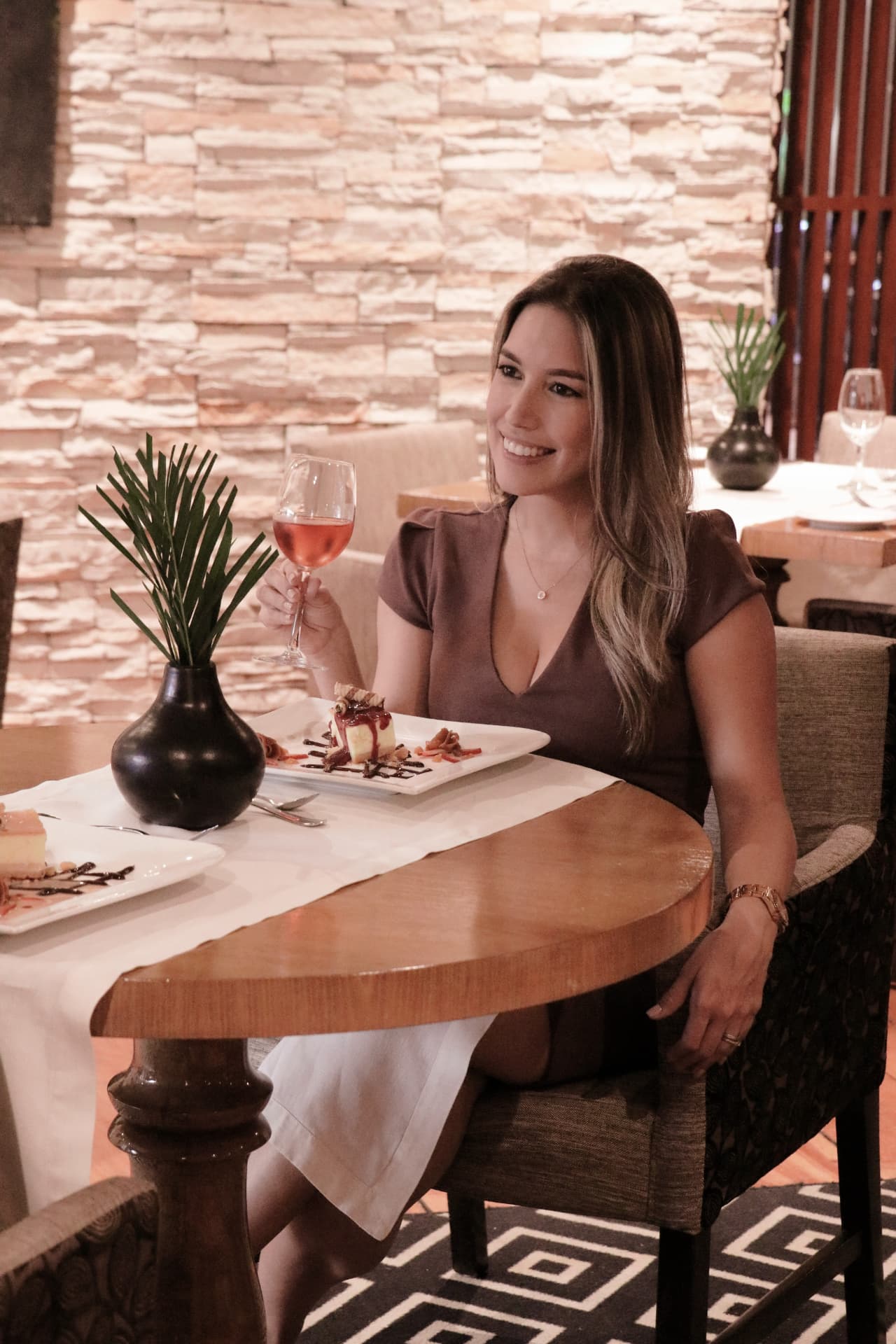
Picture this: you have spent weeks building a relationship with a prospective client. The calls went well. The product is solid. The proposal is competitive. And then they invite you to lunch.
The executive meal is not a break from the negotiation. It is the negotiation.
At that table, with no slides and no screens, the client sees something email and video calls cannot show: who you really are. How you treat the person serving you. Whether you listen or only talk. Whether you have presence or disappear into your phone.
And in many cases, what they see at that table decides the contract.
After 20+ years working with sales teams and executives in Colombia, Miami and across Latin America — and after certifying in Social & Business Etiquette at The Etiquette School of New York — I can tell you with certainty: the costliest mistakes are not the big scandals. They are the small details the client registers without ever mentioning them.
Here are the 10 most expensive ones.
Mistake 1: Arriving exactly on time (or late)
At a business meal, arriving “on time” is arriving late. The host — whoever called the meeting — should be there before the guests. If you are the guest, arrive 5 minutes early.
Being late to a high-level meal is the first signal that you do not value the other person's time. And if you place little value on their time, how will you value their project?
In the Colombian and Latin American context: yes, the culture tends to be more flexible with schedules in social settings. But at an executive meal with a multinational company, a Miami client or an international director, Anglo-Saxon punctuality applies — even if lunch is in Cali or Bogotá.
Mistake 2: Checking your phone at the table
A phone on the table is the loudest signal that something matters more than the person in front of you.
It does not matter if you place it face down. It does not matter if you say “just in case my boss calls.” The fact that it is visible says the conversation can be interrupted at any moment.
The rule: the phone goes in your pocket or bag before you sit down. If you are expecting a critical call, mention it at the start and handle it once, away from the table.
Mistake 3: Ordering the most expensive dish (or the cheapest)
Both extremes create discomfort. Ordering the most expensive item on the menu — especially as a guest — can look opportunistic. Ordering the cheapest can look like you are trying to spare the host in a way that, paradoxically, makes it more awkward.
The rule: follow the host's lead or choose something mid-range. If you do not know the restaurant, wait for the host to comment before deciding.
Mistake 4: Talking business too soon
An executive meal has an unwritten structure. The first 15-20 minutes are for rapport — light, personal, connective conversation. Launching into the pitch too early is like selling in your first LinkedIn message: technically possible, socially clumsy.
The cue to talk business usually comes from the host or the most senior person present. If it does not come, the right moment is after the main course, before dessert.
Mistake 5: Monopolizing the conversation
I have seen brilliant executives lose contracts because at the table they never stopped talking about themselves. Their company. Their achievements. Their projects.
A high-level executive conversation is 50/50. Intelligent questions about the other person, genuine active listening and concise answers about yourself. Whoever asks the most is usually the most liked.
Mistake 6: Basic table protocol errors
These are the most embarrassing because they look like “small details” — but a director with 20 years of international experience notices them instantly:
- Using the wrong fork (always start from the outside in)
- Placing the napkin on the table instead of your lap
- Starting to eat before the host
- Talking with your mouth full
- Gesturing with cutlery in your hand
- Not knowing how to signal you are finished (cutlery parallel on the plate, not crossed)
A note on the Miami and South Florida market: in upper-mid-tier business restaurants in Brickell, Coral Gables or Aventura, Anglo-Saxon table protocol is the norm — regardless of the cultural background of the guests.
Mistake 7: Ordering alcohol without reading the table
Here cultures diverge. In some Colombian business settings, sharing a glass of wine or a beer is a natural part of lunch. In U.S. corporate settings, especially midday working meetings, alcohol can be frowned upon.
The rule: if the host does not order alcohol, do not order it. If they do, one maximum. Never be the first to order.
Mistake 8: Arguing over the bill
If you invited, you pay. If you were invited, do not insist on paying. Wrestling over the check is uncomfortable for everyone and usually unnecessary — whoever called the meeting already budgeted for it.
If you want to reciprocate, the elegant way is to host the next meeting: “Next time, it's on me.”
Mistake 9: Not following up afterwards
A business meal without follow-up is a wasted opportunity. Within 24 hours, send a short message — email or WhatsApp, depending on the level of familiarity — referencing something specific from the conversation and proposing a next step.
Not a sales email. A human message showing the conversation mattered to you beyond the contract.
Mistake 10: Treating the restaurant staff badly
This is the most revealing of them all. And the most decisive.
How you treat the person serving you, when they have no power over you, says exactly how you will treat your clients, your suppliers and your team when no one is watching.
Senior executives know this. And they watch for it.
If the service was slow, if the order came out wrong, if something was off — elegance is handling it calmly and discreetly, without turning it into a power moment in front of your guest.
The executive meal as a personal brand tool
None of this is just “good manners.” It is executive image in action.
Business etiquette is one of the most underestimated competencies in corporate training across Latin America — and one of the most closely observed in Anglo-Saxon markets. In Colombia, Mexico and Peru, sales teams that master business protocol close more and build more trust — especially when working with multinational or international clients.
In the Miami and South Florida market, where Latin and Anglo-Saxon cultures interact constantly, mastering both codes is a real competitive advantage.
Lynda Osorio, MBA is a Personal & Corporate Image Consultant and founder of Power Image LLC in Miami. International speaker on image and executive presence, personal shopper and wardrobe strategist, and author of The Power of Image and Dressed to Lead. With 20+ years of experience, 500+ talks, and 10,000+ professionals trained.
Want this workshop for your sales team? Request a proposal.
Frequently asked questions about business etiquette
- What is an executive meal?
- It is a business meeting held around a shared table — lunch, dinner or breakfast — where the goal is to build relationships, advance negotiations or close deals in a setting that is more informal than the boardroom but equally strategic.
- What are the most common business meal etiquette mistakes in Colombia?
- The most frequent ones are: arriving late, checking your phone at the table, jumping into business too early, monopolizing the conversation and failing to follow up afterwards.
- Is business etiquette different in Miami than in Colombia?
- There are cultural nuances. In Miami Anglo-Saxon protocol dominates — especially around timing, alcohol and the pace of business conversation. In Colombia the context is warmer and more relational. Knowing both codes is key for executives operating in both markets.
- How do you train a team in executive etiquette?
- Through in-person or virtual corporate workshops. Lynda Osorio delivers business etiquette keynotes and workshops for sales teams and executives across LATAM and the USA, tailored to each company's sector and industry.